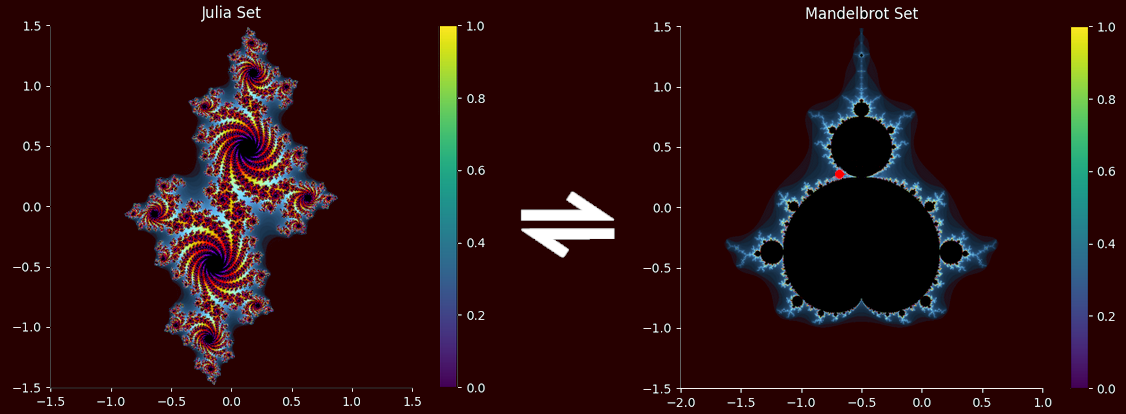
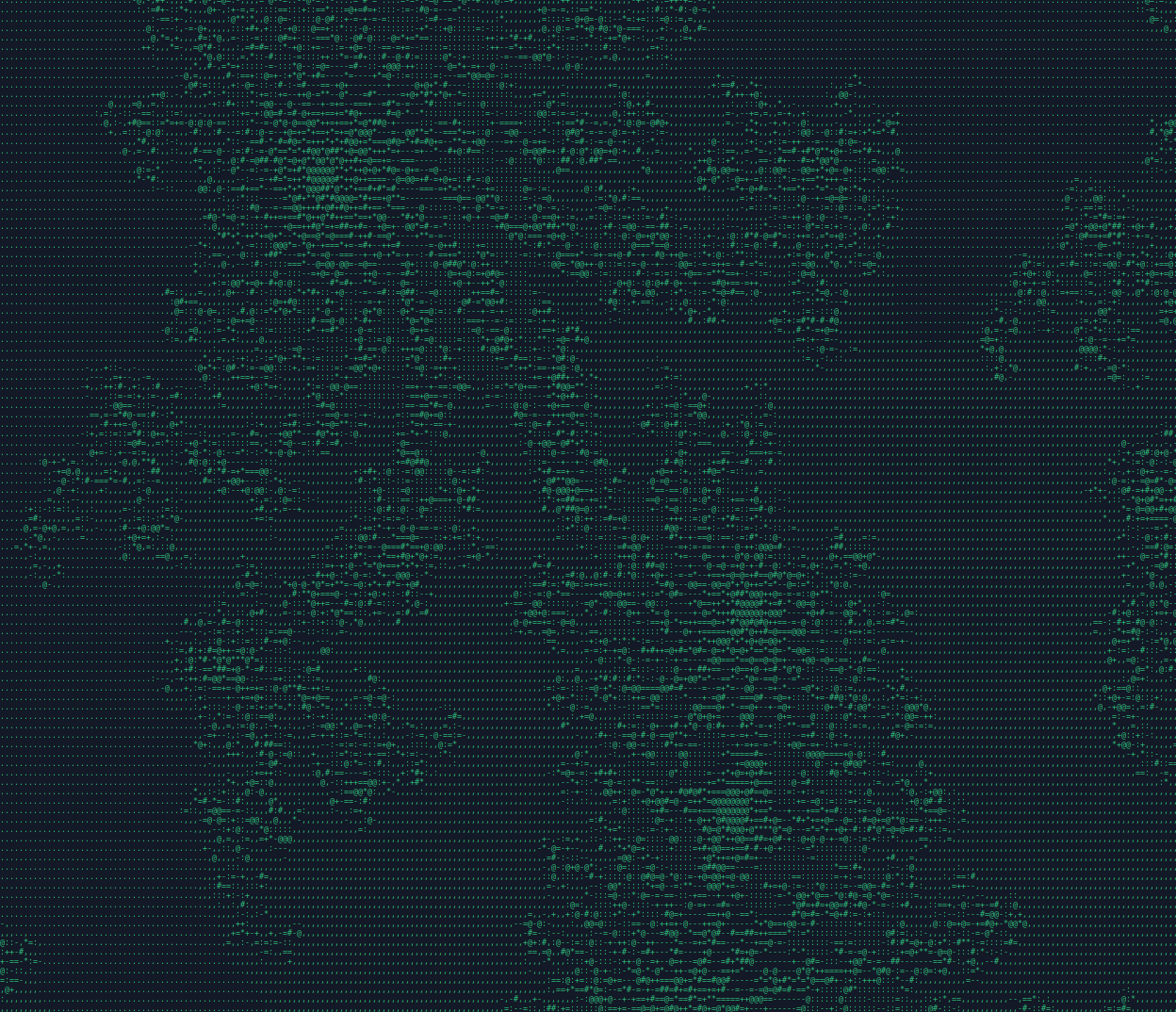
This further prototype Python script can be run in a plain terminal of most operating systems, paste it in a text editor and run it as Python script in your terminal, and give it a minute to mine. This is what a mined Xaos coin would look like.
import hashlib
import time
import random
import statistics
# Configuration for visualization (adjust these!)
VIS_WIDTH = 160 # Visualization width
VIS_HEIGHT = 100 # Visualization height
VIS_MAX_ITER = 500 # Iterations for visualization detail (200–1000; higher = more detail, slower lower = less detail, faster)
VIS_ZOOM = 0.0005 # Zoom level for spirals (smaller = deeper, e.g., 0.0001)
# Configuration for mining (adjust these!)
MIN_GRID_SIZE = 40 # Grid size for PoW (20–50; higher = slower, more memory)
MIN_MAX_ITER = 1000 # Iterations for mining (500–2000; higher = slower, harder)
DIFFICULTY_PREFIX = '00' # Mining difficulty (e.g., '0' for ~1-5s, '000' for ~10-30s)
NOVELTY_THRESHOLD = 1200 # Minimum variance of escape times for a coordinate to be valid (500–2000)
# Interesting seed Mandelbrot points for initial randomization
INTERESTING_POINTS = [
(-0.749, 0.1), # Seahorse valley (classic spirals)
(-0.12, 0.65), # Spiral boundary
(0.25, 0.0), # Elephant valley (swirling patterns)
(-0.7092, 0.24445), # 13-arm spiral near Misiurewicz point
(-0.712, 0.2487), # Spiral-rich region
(-0.706835, 0.235839), # Period 13 bulb attachment
(0.274, -0.008), # Spiral features
(0, 1), # Spiral fiber rotation
(-2, 0), # Antenna tip spirals
(-0.75, 0.0), # Tendril lightning spirals
(-0.170337, -1.06506), # Lightning tendrils
(-0.761574, -0.0847596), # Spiral zoom
(-0.7746806106269039, -0.1374168856037867), # Deep boundary spirals
(-0.4, 0.3), # Converging spirals
(0.1, 0.6), # Irregular orbits
(0.35, 0.2), # Inward spirals
(-0.8, 0.1), # Spiral oscillation
(-0.55, 0.65), # Borderline spirals
(-0.75, 0.05), # Slow escape spirals
]
def mandelbrot_escape(c, max_iter):
"""Calculate escape time for a complex point c."""
try:
z = 0j
n = 0
while abs(z) <= 2 and n < max_iter:
z = z**2 + c
n += 1
return n if n < max_iter else max_iter
except Exception as e:
print(f"Error in mandelbrot_escape: {e}")
return 0
def compute_novelty(c_center, grid_size=10, zoom=0.005, max_iter=100):
"""Compute variance of escape times to measure visual complexity."""
try:
escapes = []
step = 2 * zoom / (grid_size - 1)
for i in range(grid_size):
imag = c_center.imag - zoom + i * step
for j in range(grid_size):
real = c_center.real - zoom + j * step
c = complex(real, imag)
escapes.append(mandelbrot_escape(c, max_iter))
return statistics.variance(escapes) if escapes else 0
except Exception as e:
print(f"Error in compute_novelty: {e}")
return 0
def fractal_render(c_center, grid_size, zoom=0.005, max_iter=1000):
"""Render escape times for PoW (pure Python, memory-intensive)."""
try:
escapes = []
step = 2 * zoom / (grid_size - 1)
for i in range(grid_size):
imag = c_center.imag - zoom + i * step
for j in range(grid_size):
real = c_center.real - zoom + j * step
c = complex(real, imag)
escapes.append(mandelbrot_escape(c, max_iter))
return str(escapes)
except Exception as e:
print(f"Error in fractal_render: {e}")
return ""
def ascii_visualize_coin(c_center, width, height, zoom, max_iter):
"""Generate a pure ASCII visualization with adjustable size and iterations."""
try:
ascii_chars = [' ', '.', ',', ':', '-', '=', '+', '*', '#', '@'] # Finer gradient for spirals
output = []
step_x = 2 * zoom / (width - 1)
step_y = 2 * zoom / (height - 1)
for i in range(height):
row = ''
imag = c_center.imag - zoom + i * step_y
for j in range(width):
real = c_center.real - zoom + j * step_x
c = complex(real, imag)
n = mandelbrot_escape(c, max_iter)
if n == max_iter:
char = '@'
else:
index = min(n // (max_iter // len(ascii_chars)), len(ascii_chars) - 1)
char = ascii_chars[index]
row += char
output.append(row)
return '\n'.join(output)
except Exception as e:
print(f"Error in ascii_visualize_coin: {e}")
return ""
def mine_fractalcoin(difficulty_prefix, nonce_start=0, grid_size=40, max_iter=1000, step=0.0001):
"""Mine by finding nonce where hash of fractal render starts with difficulty_prefix."""
try:
start_time = time.time()
attempts = 0
max_attempts = 100000
while attempts < max_attempts:
# Randomly select an interesting point
c_real_base, c_imag_base = random.choice(INTERESTING_POINTS)
# Add small random offset for variety
c_real = c_real_base + random.uniform(-0.01, 0.01)
c_imag = c_imag_base + random.uniform(-0.01, 0.01)
c = complex(c_real, c_imag)
# Check novelty
novelty_score = compute_novelty(c)
if novelty_score < NOVELTY_THRESHOLD:
attempts += 1
continue # Skip low-novelty coordinates
render_str = fractal_render(c, grid_size, max_iter=max_iter) + str(nonce_start)
render_hash = hashlib.sha256(render_str.encode()).hexdigest()
if render_hash.startswith(difficulty_prefix):
elapsed = time.time() - start_time
print(f"Mined in {elapsed:.2f}s after {attempts} attempts with nonce {nonce_start}!")
print(f"Novelty score: {novelty_score:.2f}")
return c, render_hash
nonce_start += 1
if nonce_start % 1000 == 0:
c_imag += step
if c_imag > c_imag_base + 0.1:
c_imag = c_imag_base
c_real += step
attempts += 1
print("Mining stopped: too many attempts. Try lower difficulty (e.g., '0') or lower NOVELTY_THRESHOLD.")
return None, None
except Exception as e:
print(f"Error in mine_fractalcoin: {e}")
return None, None
# Mine a XaosCoin
try:
print("Starting mining...")
mined_c, mined_hash = mine_fractalcoin(DIFFICULTY_PREFIX, grid_size=MIN_GRID_SIZE, max_iter=MIN_MAX_ITER)
if mined_c:
print(f"Mined c: {mined_c}")
print(f"Mined Hash (Proof): {mined_hash}")
print(f"\nPure ASCII Visualization of XaosCoin ({VIS_WIDTH}x{VIS_HEIGHT}, {VIS_MAX_ITER} iterations):")
print("\nTip: zoom out.")
print(ascii_visualize_coin(mined_c, width=VIS_WIDTH, height=VIS_HEIGHT, max_iter=VIS_MAX_ITER, zoom=VIS_ZOOM))
else:
print("Mining failed. No visualization generated.")
except Exception as e:
print(f"Error in main execution: {e}")
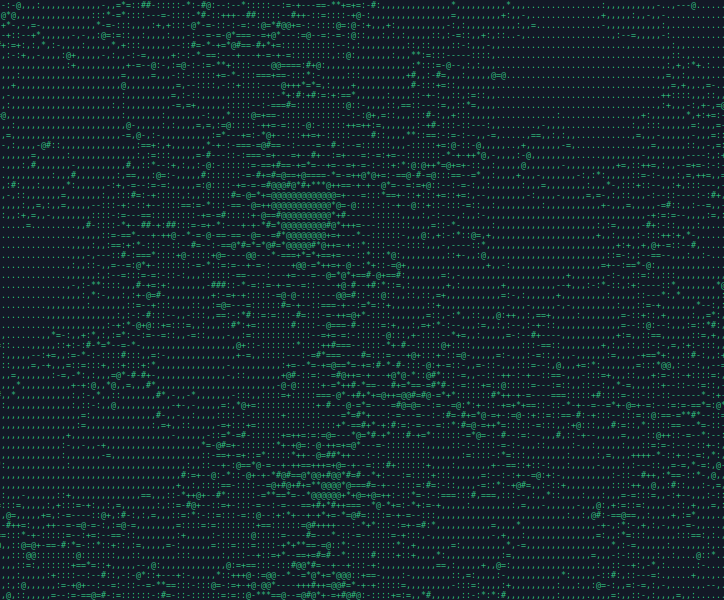
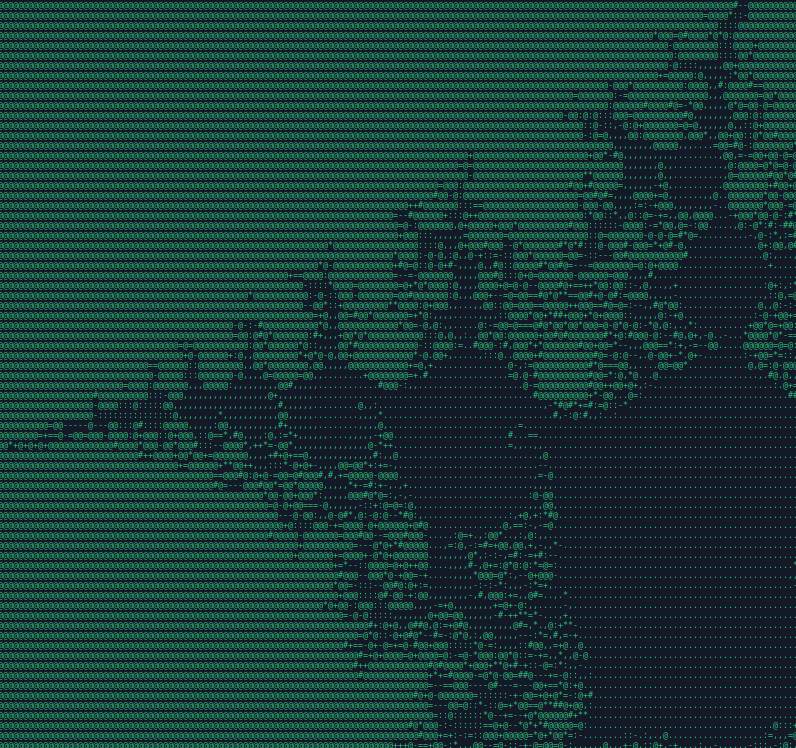
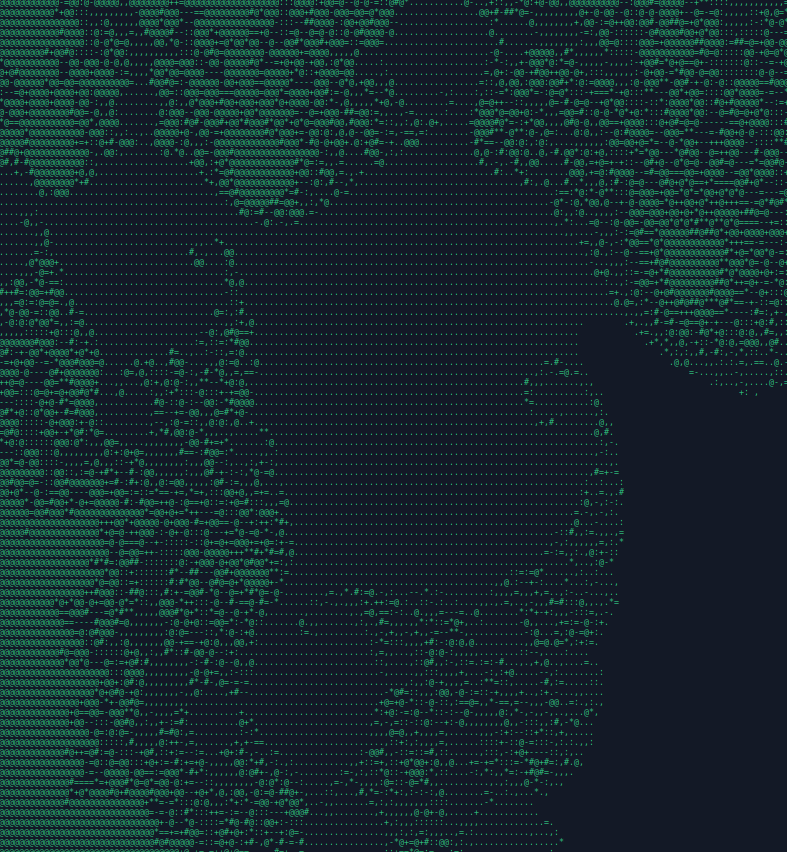
you should see something new every time it mines a new novelty-coin in ASCII coordinates like this, zoom out your terminal for better view:
This is a good Ai Python programmer or ask your favorite and try to refine it… keeping simple ASCII characters for now.